Introduction
Growing a small business in today's digital world requires more than simply having a good product or service. Customers increasingly search online, compare businesses, read reviews, visit social media profiles, and check websites before making purchasing decisions.
This is where digital marketing for small businesses becomes important.
Digital marketing allows small businesses to reach their target audience through channels such as SEO, social media marketing, Google Business Profile, content marketing, paid advertising, email marketing, and websites.
Unlike traditional marketing, digital marketing allows businesses to target specific audiences, measure campaign performance, and adjust their strategies based on results.
Whether you run a local shop, service business, startup, professional practice, or growing company, a well-planned digital marketing strategy can help you build online visibility and connect with potential customers.
What Is Digital Marketing?
Digital marketing refers to promoting a business, product, or service through online channels.
Some of the most common digital marketing channels include:
- Search Engine Optimization (SEO)
- Social Media Marketing
- Google Business Profile
- Content Marketing
- Paid Advertising
- Email Marketing
- Website Marketing
- Online Reputation Management
- Lead Generation
Businesses can combine these channels based on their goals, target audience, industry, and budget.
For example, a local business may focus heavily on local SEO and Google Business Profile optimization, while an e-commerce business may use SEO, social media, content marketing, and paid advertising to reach customers.
Why Is Digital Marketing Important for Small Businesses?
Small businesses often compete with larger companies that have bigger marketing budgets and established brands.
Digital marketing gives smaller businesses opportunities to build visibility online and reach people who are actively searching for their products or services.
Instead of relying only on traditional advertising, businesses can build a digital presence through their website, search engines, social media platforms, and other online channels.
A strong online presence can help a business:
- Reach potential customers
- Increase brand awareness
- Generate website traffic
- Build credibility
- Generate leads
- Improve customer engagement
- Promote products and services
- Measure marketing performance
1. Increase Your Online Visibility
One of the biggest benefits of digital marketing is improved online visibility.
When potential customers search for products or services related to your business, you want your company to appear where they are looking.
SEO, content marketing, social media, and Google Business Profile optimization can help increase your visibility across different online platforms.
For example, a local service provider can optimize its website and Google Business Profile for relevant local searches so potential customers can discover the business when looking for nearby services.
2. Reach the Right Target Audience
Digital marketing allows businesses to target specific audiences instead of promoting their message to everyone.
Businesses can define audiences based on factors such as:
- Location
- Age group
- Interests
- Search behavior
- Online activity
- Demographics
- Previous interactions
This can make marketing campaigns more relevant and help businesses connect with people who are more likely to be interested in their products or services.
3. Generate More Website Traffic
Your website acts as an important digital destination for your business.
Digital marketing can help bring potential customers to your website through:
- Organic search
- Social media
- Paid advertisements
- Content marketing
- Google Business Profile
- Email campaigns
- Referral traffic
More relevant traffic can create more opportunities for enquiries, bookings, purchases, or other desired actions.
However, attracting visitors is only one part of the process. Your website should also provide useful information and clear calls to action that make it easy for visitors to take the next step.
4. Improve Search Engine Visibility With SEO
Search Engine Optimization (SEO) helps businesses improve their visibility in search engine results.
A strong SEO strategy can involve:
- Keyword research
- Website optimization
- Technical SEO
- Local SEO
- Content creation
- Internal linking
- On-page optimization
- Website performance improvements
For small businesses, SEO can be particularly useful because it helps them reach people who are already searching for related products or services.
For example, someone searching for a service in their city may already have an intention to contact a business. Appearing prominently for relevant searches can help put your business in front of those potential customers.
5. Build a Strong Local Presence
For businesses serving a specific city or local area, local SEO is an important part of digital marketing.
A properly optimized Google Business Profile can help customers find important business information such as:
- Business name
- Address
- Phone number
- Website
- Opening hours
- Reviews
- Photos
- Services
Local SEO can also help businesses target location-based searches relevant to their services.
For example, instead of targeting only a broad keyword such as "digital marketing agency," a business may target relevant searches involving its specific service and location.
6. Build Brand Awareness Through Social Media
Social media gives small businesses a way to communicate directly with their audience.
Platforms such as Instagram, Facebook, LinkedIn, and others can be used to share:
- Products
- Services
- Educational content
- Customer experiences
- Company updates
- Offers
- Behind-the-scenes content
- Industry information
Consistent and useful content can help people become familiar with your brand and understand what your business offers.
Social media should not only focus on selling. Providing useful information and engaging with your audience can also help build long-term relationships.
7. Build Trust and Credibility
Customers often research a business before making a purchase or contacting the company.
A professional website, active social media presence, positive reviews, useful content, and clear business information can help create a stronger online presence.
Digital marketing gives businesses multiple opportunities to demonstrate their:
- Expertise
- Experience
- Services
- Customer feedback
- Work quality
- Brand values
When these elements are presented consistently across online channels, potential customers can get a clearer understanding of the business.
8. Generate Quality Leads
Digital marketing isn't only about getting more visitors or followers. For many businesses, the ultimate goal is generating relevant enquiries and potential customers.
Lead generation strategies can include:
- SEO
- Google Ads
- Social media advertising
- Landing pages
- Contact forms
- WhatsApp campaigns
- Lead-generation campaigns
- Content marketing
A well-designed campaign can direct potential customers toward a specific action, such as requesting a quote, booking an appointment, calling the business, or submitting an enquiry.
9. Reach Customers With Paid Advertising
Organic marketing can take time to build. Paid advertising can provide another way to reach targeted audiences.
Platforms such as Google Ads and social media advertising allow businesses to create campaigns based on specific goals and audiences.
Paid campaigns can be used to promote:
- Products
- Services
- Special offers
- Events
- Landing pages
- Lead forms
- New business launches
Businesses can monitor campaign data and make adjustments based on performance.
10. Measure Marketing Performance
One major advantage of digital marketing is that many activities can be measured.
Businesses can monitor metrics such as:
- Website traffic
- Search visibility
- Leads
- Clicks
- Engagement
- Conversion rates
- Advertising performance
- Social media reach
This information can help businesses understand which marketing activities are generating useful results and where improvements may be needed.
Instead of making decisions based only on assumptions, businesses can use available performance data to refine their marketing strategies.
11. Compete With Larger Businesses
Small businesses may not have the same resources as large companies, but digital marketing provides different ways to compete for online attention.
A focused strategy can help a small business concentrate on a specific:
- Location
- Customer segment
- Product category
- Service
- Industry niche
For example, a small local company may focus on specific local search terms and relevant content rather than trying to compete for extremely broad keywords.
This targeted approach can help businesses build visibility within the audience they actually want to reach.
12. Create Long-Term Business Growth
Digital marketing should not always be viewed as a short-term advertising activity.
SEO content, website improvements, social media presence, customer reviews, and brand awareness can contribute to a business's long-term online presence.
A sustainable strategy can combine:
SEO + Content Marketing + Social Media + Local SEO + Paid Advertising + Lead Generation
The exact combination depends on the business and its goals.
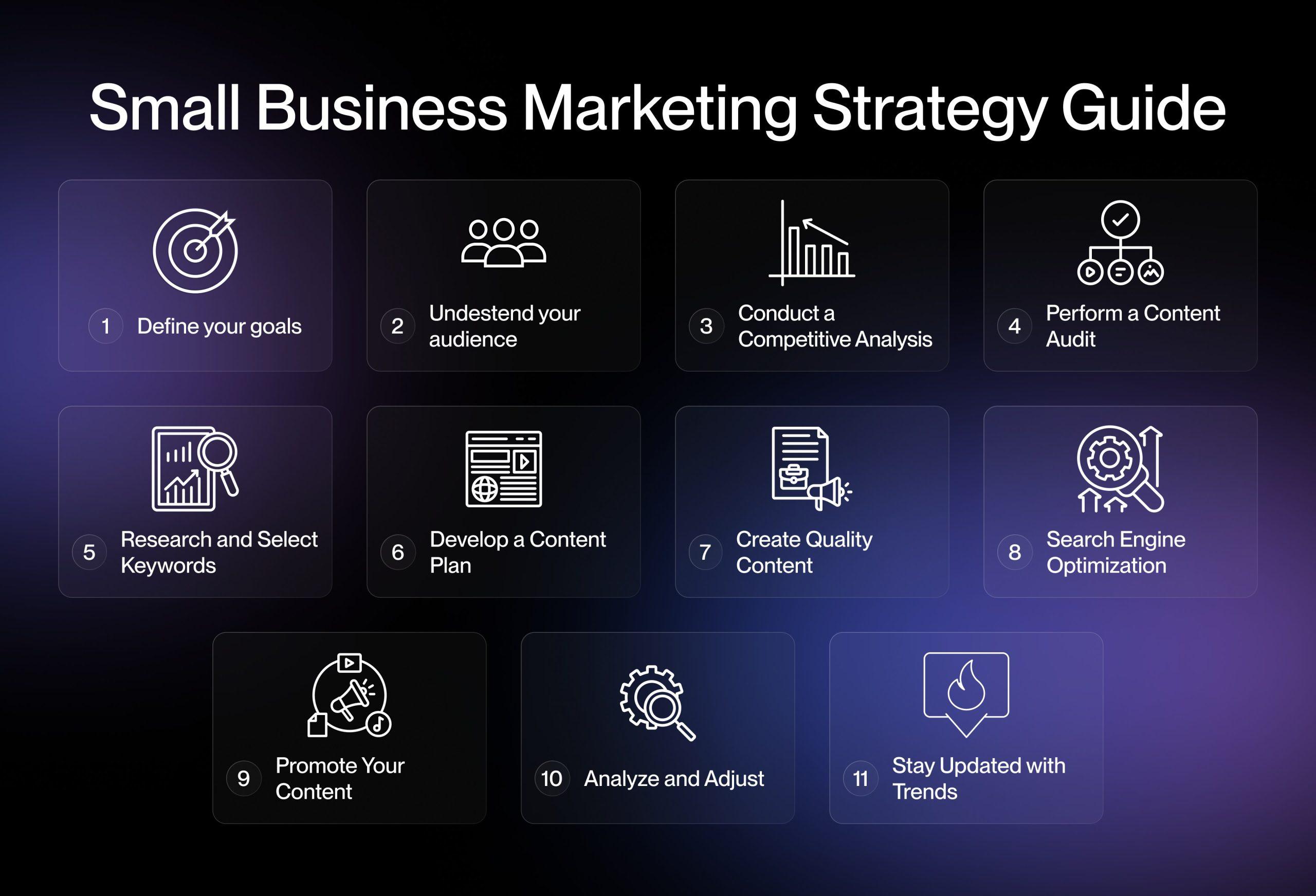
How to Create a Digital Marketing Strategy for a Small Business
A successful strategy starts with understanding the business rather than simply using every available marketing channel.
Step 1: Define Your Business Goals
Determine what you want to achieve.
Your goals could include:
- Increasing website traffic
- Generating leads
- Increasing enquiries
- Improving local visibility
- Building brand awareness
- Increasing online sales
Step 2: Identify Your Target Audience
Understand who your ideal customers are and where they spend their time online.
Step 3: Research Your Competition
Analyze competing businesses, their websites, content, search visibility, social media activity, and online presence.
Step 4: Choose the Right Marketing Channels
Not every business needs every digital marketing channel.
Choose the channels that are relevant to your audience and business goals.
Step 5: Create Valuable Content
Publish content that answers customer questions and demonstrates your knowledge.
Step 6: Track Performance
Monitor your website, SEO, social media, and advertising performance.
Step 7: Improve Your Strategy
Digital marketing is an ongoing process. Review the results and make changes based on performance and customer behavior.
Common Digital Marketing Mistakes Small Businesses Should Avoid
Some common mistakes include:
- Trying to use every marketing platform at once
- Ignoring SEO
- Not having a mobile-friendly website
- Posting inconsistently on social media
- Focusing only on promotional content
- Not tracking campaign performance
- Ignoring local SEO
- Using irrelevant keywords
- Having unclear calls to action
- Expecting immediate results from every marketing channel
A focused and consistent strategy is generally more useful than simply being present everywhere.
Why Businesses Should Invest in Professional Digital Marketing Services
Managing SEO, content, social media, paid advertising, analytics, and website optimization requires time and specialized knowledge.
Professional digital marketing services can help businesses develop and manage a strategy based on their goals and target audience.
A digital marketing team can assist with areas such as:
- SEO
- Local SEO
- Social media marketing
- Performance marketing
- Lead generation
- Content marketing
- Website optimization
- Digital strategy
The right approach depends on the business, industry, audience, budget, and growth objectives.
Conclusion
Digital marketing has become an important part of building and growing a small business online. From improving search visibility and reaching targeted audiences to generating leads and building brand awareness, digital channels provide businesses with multiple ways to connect with potential customers.
The key is not simply to use more marketing channels. Instead, businesses should focus on selecting the right strategies, creating valuable content, understanding their audience, measuring performance, and continuously improving their approach.
With a well-planned digital marketing strategy, small businesses can build a stronger online presence and create more opportunities for sustainable growth.
Looking to improve your business's online presence? Anthesis can help businesses with SEO, digital marketing, lead generation, performance marketing, and website solutions designed around their business goals.